


It started with a conversation in an airport.
Traveling with three other couples - friends I’ve known since the second grade - there were eight of us gathered around a long table at the airport food court, grabbing a quick bite before our boarding time. I don’t recall the exact context, but someone mentioned Mars, and I took that as my cue to share a conclusion I’d recently reached after extensive reading.
“You know when we’re going to Mars? Never.”
“What makes you say that?”
Let’s see, I thought. How best to summarize and still leave time to finish lunch, without monopolizing the conversation for the next 10 minutes? “Well, it’s just… it would just be really hard,” I stammered. “Like, humans are not made to live in space. I mean, just getting there would be… I’d have to write an entire book.”
So I did.
I did so because by that time, my wife and I had been living and working in Silicon Valley for seven years - she as a software engineer, and me as a tech writer. During those seven years, I’d developed a lingering sense of unease about my experience here that was hard to name. Part of this unease was informed by what I had read and heard about the companies in this town, about the handful of men running those companies, and about how that handful of men was affecting the lives of this town’s eight million residents, and indeed the planet’s eight billion humans.1 What I had begun to see was the glaring contradiction here between what this city thinks it is, and what it actually is. I was curious to learn more about this disconnect.
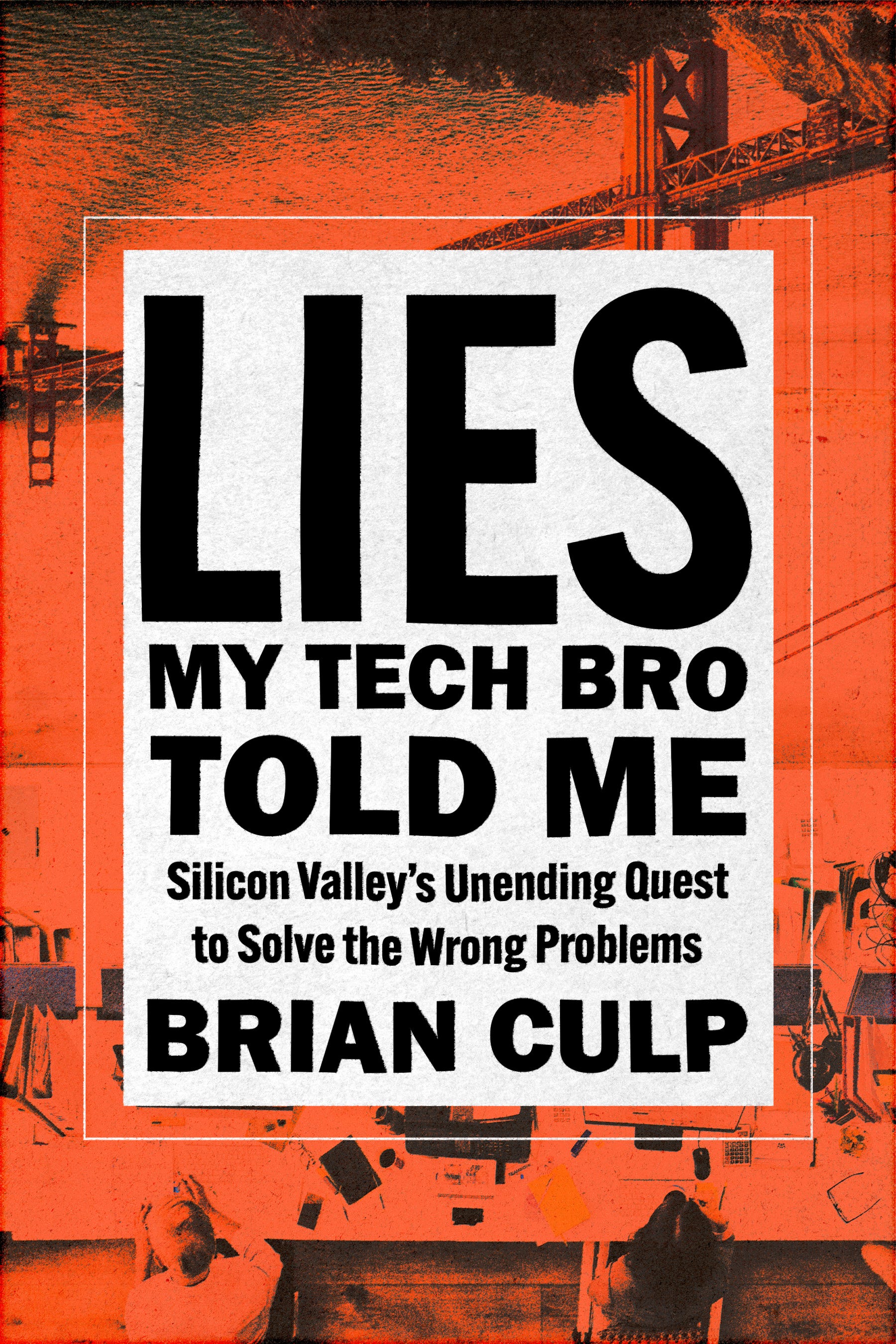
So, over the course of the next several months, I researched and wrote Lies My Tech Bro Told Me. The book exposes how AI, crypto, Mars colonization, and TESCREAL - an acronym coined by Temnit Gebru and Émile Torres that describes a quasi-religious doctrine tying it all together - serve as interconnected confidence schemes that divert attention and resources from problems that are both real and solvable.
Written for the layperson, Lies offers readers a timely bullshit detector for a moment when being bullshit-averse might just save a marriage (if it keeps a spouse from using a chatbot as a therapist), a bank account (if a son or nephew starts asking about crypto), or even a career (if you take early retirement because your boss won’t shut up about AI during every all-hands). You need to be aware of these lies because there’s no undo button for some of these decisions.
As mentioned, I’m a tech writer by trade. And the most important test of writing for me throughout most of my career is this: does the user take the right action?
Ultimately, Lies calls on the reader to take this right action. (And no, the right action isn’t “write your congressperson” or “vote with your wallet.”) Except that I don’t pretend to know what the right action means in your circumstance. So in the book’s final chapter, I offer ten different possibilities about what we can do about all this, drawn from the expertise and contributions from other thinkers and activists from Silicon Valley and beyond.
Now, the challenge is to get this book out in the world. A quick bit of book publishing inside baseball knowledge: publishers (and agents for that matter) aren’t really looking for books anymore. They’re looking for platforms. Which means this newsletter. Or that YouTube channel. The platform is not yet built because of two factors: one, I didn’t know what I didn’t know. And two, publishing sharp criticisms of Silicon Valley three would have put our livelihoods at risk. (It still does.)
This is where you come in. This is how you can become part of something bigger than ourselves. If you’ve read this far, there are three right actions you can take right now. You can do one, or you can do all three. Up to you!
Recommend this newsletter. Just click this and help spread the word.
Get the first chapter of Lies in either PDF or audio book file. To do so, send a request to brian.culp@protonmail.com and let me know if you want the print or the audio version. (I’ll include instructions for loading it on an e-reader like Kindle.)
So that’s what the Lies thing is all about. Taking either or both of the actions above will help get this book launched - and it will get launched one way or another - which in turn will help build what comes next.
And always remember: there’s more of us than there are of them.
The Bay Area has the same population as Portugal. And also Sweden. Hej!